By Andrew Guise, Owner of Willis Auto LLC
A humming or growling noise on your Subaru Outback, Forester, or Impreza that changes pitch with your speed or shifts when you turn is commonly diagnosed as a worn wheel bearing. This is a known wear pattern on these models, commonly reported on roughly 2005-2020 vehicles. Left alone, a bad wheel bearing moves from annoying to genuinely dangerous. Here is what to watch for, what the repair involves, and what it will cost.
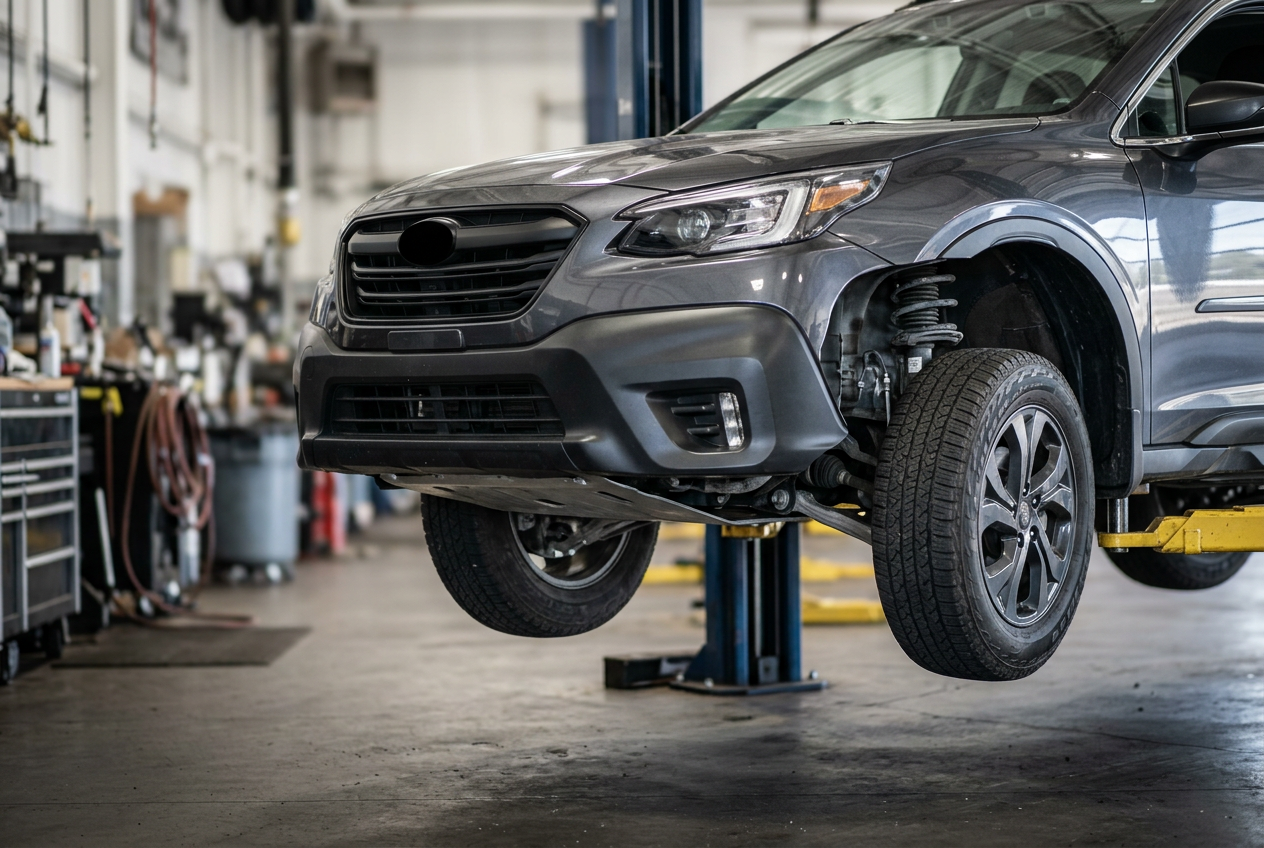
What does a bad wheel bearing sound like on a Subaru?
The classic sign is a low hum or growl that rises and falls with vehicle speed. It is not tied to engine RPM, so it stays steady when you coast with the clutch in or the transmission in neutral. The noise often shifts when you change lanes or make a gradual turn at highway speed. That change in pitch is the load shifting from one bearing to another, and it is one of the clearest clues a technician uses to pinpoint which corner is failing.
Some owners also notice a faint vibration through the floor or seat at highway speed. In later stages the noise becomes a grinding or rumbling that is hard to miss.
Which Subaru models are commonly affected?
Premature wheel bearing wear is commonly reported on the Subaru Outback, Forester, and Impreza, roughly 2005-2020. The Outback and Forester are the most frequently mentioned, likely because of their higher curb weight and the extra load their symmetrical AWD systems place on the hubs. The Impreza, including the WRX variant, also shows up regularly. If you drive any of these models and hear the hum, the bearing is the first thing to rule out.
Symptom stages: early, mid, and late
- Early: A faint hum at 50-70 mph that comes and goes. You might notice it most on smooth highway pavement where road noise is low. The noise shifts slightly when you sway the car left or right.
- Mid: The hum is present at most highway speeds and is noticeable at lower speeds too. Steering may feel slightly vague. The noise is clearly louder on turns in one direction.
- Late: A loud grinding or rumbling at any speed. Possible vibration in the steering wheel or floor. The wheel may have visible play when lifted off the ground. At this stage the bearing is close to failure.
Is it safe to keep driving with a bad wheel bearing?
No. A wheel bearing that reaches the late stage can overheat and seize, locking the wheel while the car is moving. It can also allow enough play in the hub that the wheel wobbles, which affects braking and steering. If the noise is loud, constant, or accompanied by vibration, stop driving and have the car inspected right away. Treat this as a safety item and do not wait to see if it gets better.
If you are unsure how far along the wear is, a quick lift-and-check takes only a few minutes. A technician grabs the tire at the 12 and 6 o'clock positions and rocks it. Any detectable play points to a bearing or hub that needs attention.
What causes Subaru wheel bearings to wear early?
The root cause is commonly diagnosed as a combination of the bearing design, the added stress of Subaru's all-wheel-drive system, and real-world road conditions. Central Kansas roads add their own share of stress. The freeze-thaw cycles through a Salina winter open up potholes on city streets and county roads, and running I-70 or I-135 for work means your front end absorbs a lot of heavily grooved and patched pavement over time. That repeated impact loading shortens bearing life on any vehicle, and Subarus are not immune.
What does the repair involve?
The standard repair is a wheel bearing or hub assembly replacement at the affected corner. On most Subaru applications the front bearing comes as a complete hub assembly with the bearing already pressed in, which makes the job straightforward. The rear can be more involved depending on the model year and whether the bearing is serviceable separately from the knuckle.
The technician removes the wheel, brake caliper, rotor, and axle nut, then pulls the hub assembly. The new unit goes in with a fresh axle nut torqued to the manufacturer's specification. A road test confirms the noise is gone before the car goes back to the customer.
What does a Subaru wheel bearing replacement cost?
| Factor | Lower end | Higher end |
|---|---|---|
| Front hub assembly (most models) | Straightforward bolt-on | N/A, same job |
| Rear bearing (press-in type) | More labor, press required | Adds cost vs. front |
| One corner vs. two corners | Single bearing | Pair if both are worn |
| OEM vs. quality aftermarket part | Aftermarket (shorter warranty) | OEM or premium brand |
| Model year and trim | Simpler older designs | Newer integrated designs |
Without seeing the vehicle, a single number would be a guess. What moves the price is which corner needs work, whether it is a bolt-on hub or a press-in bearing, and whether a second corner is close enough to warrant doing both at the same visit. Call or schedule online and we will give you a firm quote after a lift inspection.
Should I check for a recall on my Subaru?
Wheel bearing wear on these models is a known pattern, but no confirmed recall covers it as of this writing. That can change. Run your VIN at NHTSA's recall lookup to see whether any open recalls apply to your specific vehicle. You can also check the Subaru owners site for any active service programs tied to your VIN. If a recall does apply, the dealer handles that work at no charge. Out-of-warranty bearing replacement is what an independent shop like Willis Auto handles.
How Willis Auto confirms and fixes it
Andrew Guise, owner of Willis Auto, and the Willis Auto team start with a lift inspection: checking for play in the hub, listening for roughness when spinning the wheel by hand, and confirming the noise pattern matches a bearing rather than a tire or brake issue. From there you get a straight diagnosis and a written quote before any work starts. All parts and labor carry a 12-month/12,000-mile warranty. We also offer pickup and drop-off service if getting the car to 1101 Park St. is a problem.
If your Subaru is due for an oil service at the same visit, our oil change service page has the details. For any brake concerns that come up during the inspection, see our brake service page.
Frequently Asked Questions
Can I drive my Subaru with a bad wheel bearing?
Not for long. A worn wheel bearing can overheat, seize, or cause the wheel to wobble. Stop driving and have it inspected as soon as the humming or grinding starts getting louder.
How do I know which wheel bearing is bad?
The hum usually shifts when you gently sway the car at highway speed. If the noise gets louder when you steer left, the right bearing is likely the problem, and vice versa. A technician can confirm it by lifting the car and checking for play or roughness in the hub.
Does Subaru have a recall for wheel bearings?
No confirmed recall covers this issue as of this writing. It is a known wear pattern on several Subaru models. Check your VIN at nhtsa.gov/recalls to be sure nothing applies to your specific vehicle.
How much does a Subaru wheel bearing replacement cost?
Cost varies by model year, which corner of the car is affected, and whether the hub assembly needs to come with it. The price range section above covers what moves the number. Call us for a firm quote after a lift inspection.
Will a bad wheel bearing affect my all-wheel drive system?
Yes. Subaru's symmetrical AWD relies on all four wheels spinning smoothly and evenly. A failing bearing can put extra stress on the center differential and other drivetrain components, so it is worth fixing promptly.
Hear a hum or growl from your Subaru Outback, Forester, or Impreza? Andrew Guise and the Willis Auto team will inspect it, tell you exactly what is worn, and give you a straight quote. All work is backed by a 12-month/12,000-mile warranty. Pickup and drop-off available.
Sources